
Dental implants and dentures are both options for replacing missing teeth. Dental implants are fixed restorations supported by the jawbone, while dentures are removable appliances that replace multiple missing teeth. The right choice depends on oral health, jawbone support, budget, lifestyle, and personal treatment goals. A dental consultation is required to determine which option may be appropriate for you.
If you are missing one or more teeth, choosing between dental implants and dentures can feel overwhelming. This explains the main differences, benefits, considerations, and questions to discuss with a dentist before making a decision.
Table of Contents
- What Are Dental Implants?
- What Are Dentures?
- Dental Implants vs Dentures: Complete Comparison
- Which Option May Be Right for You?
- What Is an Implant-Supported Denture?
- Questions to Ask Your Dentist
- Frequently Asked Questions
- Schedule a Tooth Replacement Consultation in Somerset County
What Are Dental Implants?
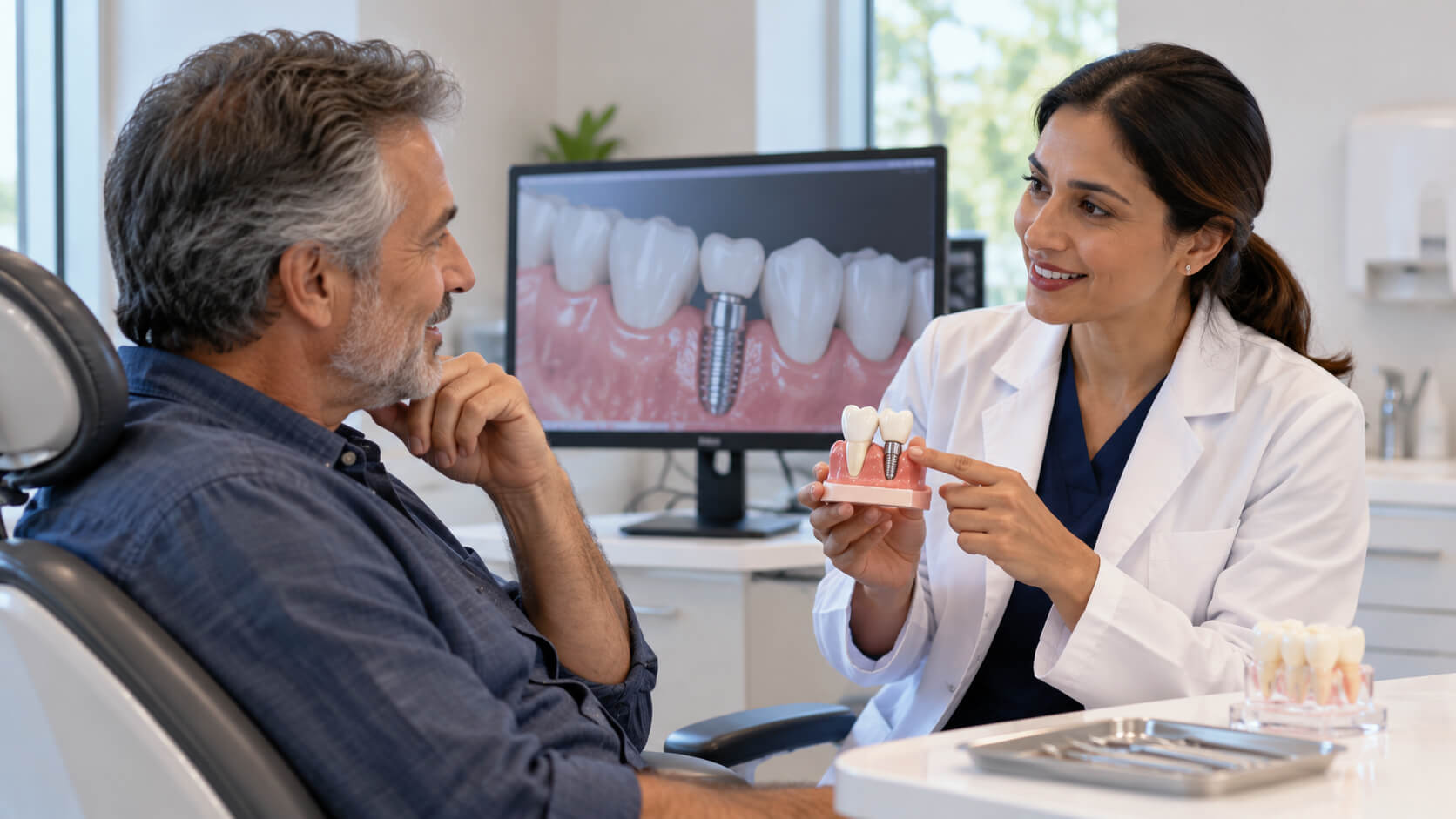
Dental implants are a long-lasting tooth replacement option that uses an artificial root to hold a new tooth or denture securely in place. After the implant integrates with the jawbone, it can support a crown, bridge, or denture. Dental implants are designed to remain fixed in the mouth and may be an option for adults who have adequate jawbone support and healthy gums.
Implant treatment requires a comprehensive dental evaluation. The dentist will review your oral health, gum condition, jawbone support, medical history, and treatment goals before recommending a personalized plan.
What Are Dentures?
Dentures are removable teeth that can replace some or all of your missing teeth. They may replace several teeth or a full arch of teeth. Dentures are custom-made to fit the shape of your mouth and can be removed for cleaning and sleeping.
Dentures may be an option for adults who prefer a non-surgical tooth replacement solution or who are not currently candidates for dental implants. A dentist can evaluate the fit, comfort, and support needed for a denture to function well.
Dental Implants vs Dentures: Complete Comparison
The best tooth replacement option depends on your individual needs. The table below provides a general comparison, but a dental exam is needed to determine which option may be appropriate for you.
| Factor | Dental Implants | Dentures |
| Placement | Implant posts are placed in the jawbone and support a crown, bridge, or denture. | Dentures are false teeth that fit over the gums and can be taken out. |
| Stability | Implant-supported restorations are fixed in place and do not need to be removed daily. | Dentures are removable and may require adhesive or periodic adjustment for comfort and fit. |
| Jawbone support | Implants require adequate jawbone support for placement. | Dentures do not require implant placement, but bone changes over time may affect fit. |
| Maintenance | Brush and floss around implant-supported restorations and attend regular dental visits. | Remove and clean dentures daily and follow the dentist’s care instructions. |
| Treatment process | Implant treatment may involve multiple visits and a healing period. | Dentures may be prepared and fitted without implant placement, though adjustments may be needed. |
| Suitability | Suitability depends on gum health, jawbone support, medical history, and treatment goals. | Suitability depends on oral health, gum condition, and the number of missing teeth. |
This comparison is general educational information. Dental implants and dentures both have advantages, and the most appropriate option depends on a comprehensive dental evaluation and your personal treatment goals.
Which Option May Be Right for You?
Dental implants may be considered by adults who want a fixed tooth replacement option and have sufficient jawbone support. They may be appropriate for replacing one tooth, several teeth, or supporting a full-arch restoration in certain cases.
Dentures may be considered by adults who prefer a removable option, need to replace multiple teeth, or are not currently candidates for implant treatment. Dentures can restore the appearance of a complete smile and support everyday functions such as eating and speaking, though individual experiences vary.
For some patients, an implant-supported denture may offer a middle-ground approach. This option uses dental implants to help support a denture, which may improve stability for eligible patients. A consultation is required to determine whether this option is appropriate.
What Is an Implant-Supported Denture?
An implant-supported denture is a denture that attaches to dental implants for added support. Instead of relying only on the gums for retention, the denture may connect to implants placed in the jawbone.
This option may be considered for adults with multiple missing teeth who want additional stability but are not seeking individual implants for every missing tooth. Suitability depends on jawbone support, gum health, and a personalized treatment plan.
Questions to Ask Your Dentist
Before choosing between dental implants and dentures, consider asking the following questions during your consultation.
- Am I a candidate for dental implants based on my gum health and jawbone support?
- Would a denture, implant-supported denture, or another restoration better fit my needs?
- What will the treatment process involve from start to finish?
- How should I care for my chosen tooth replacement option?
- How often will I need follow-up visits or adjustments?
- What factors could affect the long-term fit and function of my restoration?
Frequently Asked Questions
Conclusion
If you are missing one or more teeth and want to understand whether dental implants, dentures, or an implant-supported denture may be right for you, Friendly Dental of Somerset can help. Our patient-first team welcomes patients from Somerset, Franklin, Hillsborough, Bridgewater, Manville, New Brunswick, and nearby communities.
Call Friendly Dental of Somerset at +1 855-960-3860 to request a consultation and discuss your tooth replacement options.
Disclaimer: This content is for general educational purposes only and is not a substitute for a dental exam, diagnosis, or personalized treatment plan. Please schedule a consultation with Friendly Dental of Somerset or contact a qualified dental professional for advice specific to your oral health. Treatment outcomes, comfort, and suitability vary by patient, oral health, jawbone support, and follow-up care.