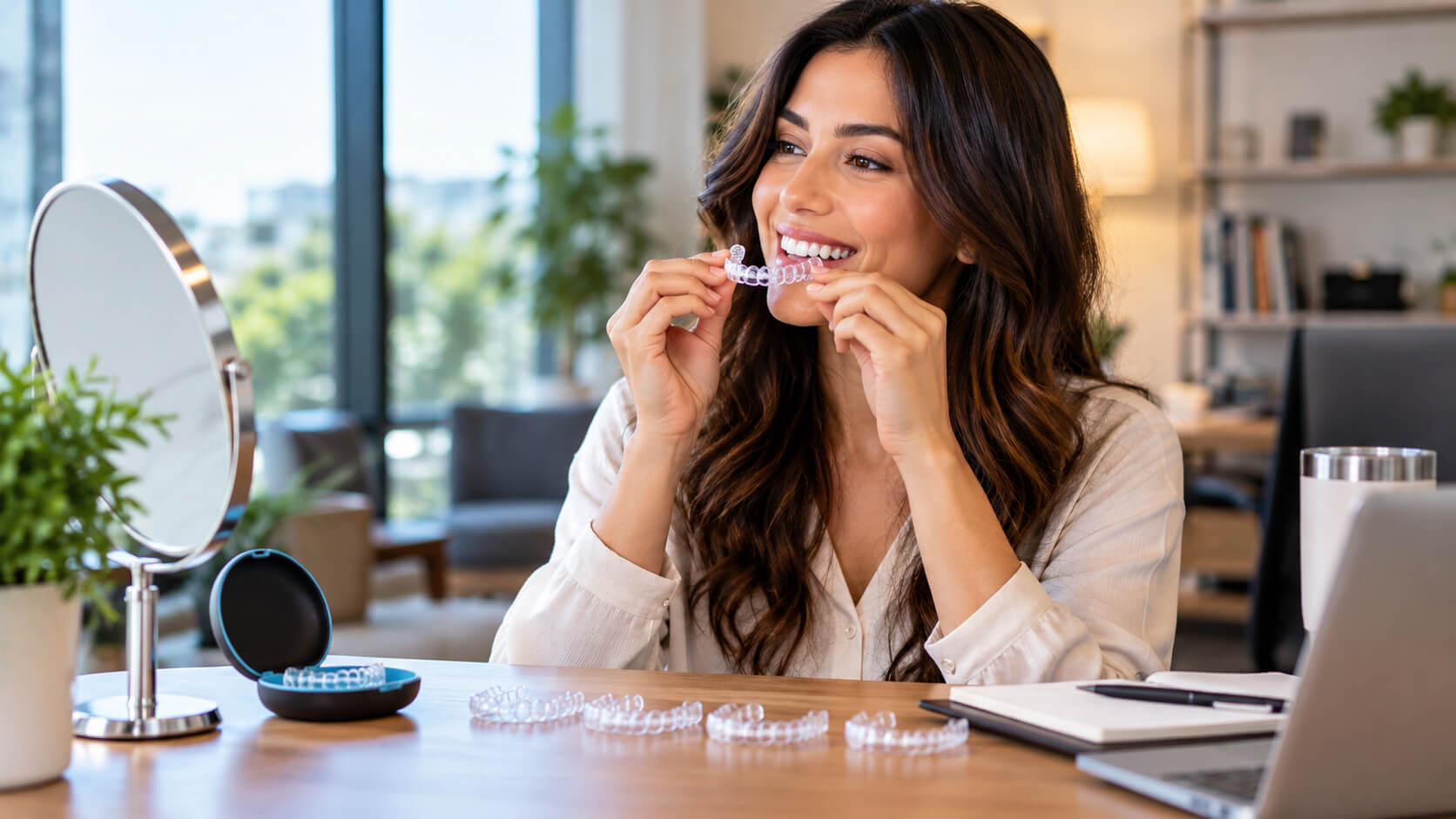

The Invisalign Process Step-by-Step for Busy Adults usually includes a consultation, digital records, a personalized treatment plan, aligner delivery, regular progress checks, and retainers. Most adults wear clear aligners for 20 to 22 hours each day, changing aligners as directed by their dental provider. A consultation is required to determine whether Invisalign is appropriate for your smile.
Between work, family responsibilities, and everyday commitments, starting orthodontic treatment can feel like one more task on an already full schedule. This Invisalign Process Step-by-Step guide explains what busy adults can expect week by week and shares simple habits that may help you stay on track from the first consultation to retainers.
Table of Contents
- What Is Invisalign?
- Is Invisalign a Good Option for Busy Adults?
- Invisalign Process Step-by-Step
- What to Expect Week by Week
- How to Stay on Track With Clear Aligners
- What Happens After Invisalign Treatment?
- Frequently Asked Questions
- Schedule an Invisalign Consultation in Somerset
What Is Invisalign?
Invisalign is a clear aligner system that uses a series of custom-made, removable aligners to gradually shift teeth into a straighter position. Unlike traditional braces, clear aligners do not use metal brackets or wires. They are designed to be removed for meals, brushing, and flossing.
Invisalign may be appropriate for adults with certain types of crowding, spacing, or bite concerns. However, suitability depends on a comprehensive dental evaluation and a personalized treatment plan. Results vary by patient, and a consultation is required to determine whether clear aligners are the right option for you.
Is Invisalign a Good Option for Busy Adults?
Invisalign can be a convenient option for busy adults because the aligners are removable and require fewer visible orthodontic components than traditional braces. Adults may appreciate the ability to remove aligners for important meetings, meals, photos, or oral hygiene routines.
That said, clear aligners require consistency. Wearing aligners for the recommended amount of time each day is important because inconsistent wear may affect the treatment timeline. Busy adults can succeed with Invisalign by building simple routines around meals, commuting, work, and bedtime.
Explore the Invisalign category for more patient resources: https://www.friendlydental.us/category/invisalign/
Invisalign Process Step-by-Step
The Invisalign Process Step-by-Step may vary slightly based on your dental needs, but most treatment plans follow a similar sequence.
- Step 1: Initial consultation. The dentist evaluates your teeth, gums, bite, and smile goals to determine whether Invisalign may be appropriate.
- Step 2: Digital records and treatment planning. Digital impressions or scans and other records may be used to help create a personalized aligner plan.
- Step 3: Treatment plan review. The dentist reviews the projected tooth movement and explains the estimated number of aligners and general treatment timeline.
- Step 4: Aligner fitting. Once the custom aligners are ready, the dentist provides your first series and reviews how to wear, remove, clean, and store them.
- Step 5: Progress check appointments. Periodic visits allow the dental team to monitor tooth movement and make adjustments if needed.
- Step 6: Retention phase. After active treatment, retainers help maintain the position of your teeth.
What to Expect Week by Week?
Every Invisalign plan is personalized, so your exact schedule may differ. The following week-by-week overview can help busy adults understand what a typical treatment rhythm may look like.
Week 1: Consultation and Planning
Your first week usually begins with a consultation. The dentist will discuss your smile goals, examine your teeth and gums, and determine whether clear aligners are appropriate for your needs. If you decide to move forward, digital records may be taken to support treatment planning.
Week 2 to Week 4: Treatment Plan and Aligner Preparation
During this period, your dental team may finalize the treatment plan and prepare for aligner fabrication. This is a good time to ask questions about wear time, meals, travel, cleaning, and progress visits. Planning ahead can make it easier to stay on track once treatment begins.
Week 5: Aligner Delivery
When your first aligners are ready, the dental team will review how to place and remove them comfortably. You will receive instructions on daily wear time, aligner cleaning, and what to do if an aligner feels tight or uncomfortable.
Week 6 and Beyond: Building a Daily Routine
Most patients transition to a new aligner set according to their personalized schedule. Many clear aligner plans involve changing aligners approximately every one to two weeks, but only follow the schedule provided by your dental provider. Keeping aligners in a case during meals and brushing after eating can help support a consistent routine.
Midpoint: Progress Check Appointments
Progress visits are an important part of the Invisalign process. These appointments allow the dentist to monitor movement, review your wear routine, and address any concerns before they affect your treatment timeline.
Final Weeks: Refinements and Retainers
Some patients may need refinement aligners to fine-tune tooth positioning near the end of treatment. After active treatment is complete, retainers are typically used to help maintain the results. Your dentist will explain how often to wear retainers and how to care for them.
How to Stay on Track With Clear Aligners?
Busy adults can make Invisalign easier by creating a routine that fits naturally into daily life. Consistency is often more important than perfection.
- Wear aligners for the recommended time each day, typically 20 to 22 hours daily unless your dental provider gives different instructions.
- Keep a small aligner case in your bag, car, or work desk so aligners are never wrapped in tissue or left unprotected.
- Remove aligners only for meals, drinks other than water, brushing, and flossing.
- Rinse aligners with cool water and clean them as directed by your dental team.
- Set reminders on your phone for aligner changes, progress visits, and evening wear checks.
- Pack a travel kit with your aligner case, toothbrush, toothpaste, and floss when commuting or traveling.
- Contact the dental team promptly if an aligner is lost, damaged, or not fitting as expected.
Read Invisalign vs Braces for Adults in Somerset NJ: https://www.friendlydental.us/blogs/invisalign-vs-braces-for-adults-somerset-nj/
Learn about the Certified Platinum Invisalign Provider at Friendly Dental of Somerset: https://www.friendlydental.us/blogs/certified-platinum-invisalign-provider-somerset-nj/
What Happens After Invisalign Treatment?
After active clear aligner treatment, retainers help support the long-term position of your teeth. Teeth can shift over time, so following your dentist’s retainer instructions is an important part of maintaining your results.
Your dentist will recommend a retainer schedule based on your individual treatment plan. Regular dental checkups and cleanings also support overall oral health during and after orthodontic treatment.
Frequently Asked Questions
Schedule an Invisalign Consultation in Somerset
If you are a busy adult considering clear aligners, Friendly Dental of Somerset can help you understand whether Invisalign may be right for your smile. Our team provides patient-first care and welcomes patients from Somerset, Franklin, Hillsborough, Bridgewater, Manville, New Brunswick, and nearby communities.
Call Friendly Dental of Somerset at +1 855-960-3860 to request an Invisalign consultation and learn more about the Invisalign Process Step-by-Step for Busy Adults.
Disclaimer: This content is for general educational purposes only and is not a substitute for a dental exam, diagnosis, or personalized treatment plan. Please schedule a consultation with Friendly Dental of Somerset or contact a qualified dental professional for advice specific to your oral health. Invisalign treatment timelines and results vary by patient, oral health, aligner wear consistency, and follow-up visits.