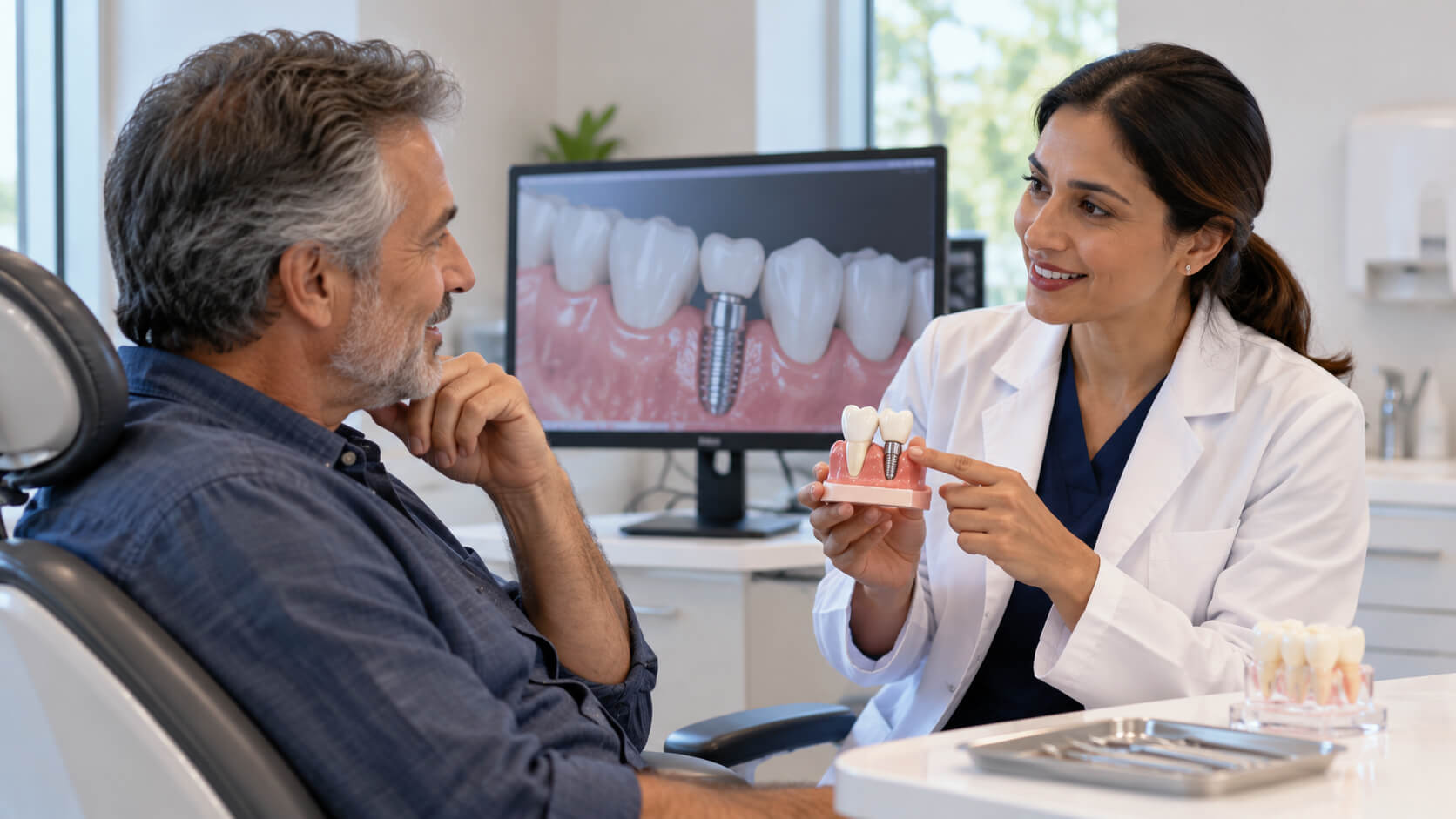

Adults with tooth loss or gum disease may still be candidates for dental implants. Treatment planning often begins with a dental exam, gum health evaluation, and assessment of jawbone support to determine whether dental implants in Somerset County are appropriate for your needs.
Missing one or more teeth can affect the way you chew, speak, and feel about your smile. If you are considering tooth replacement, this Complete Guide to Dental Implants explains how tooth loss and gum disease may affect your options, what the implant process can involve, and when to request a personalized consultation.
Table of Contents
- What Are Dental Implants?
- Can Adults With Tooth Loss Get Dental Implants?
- Can You Get Dental Implants With Bone Loss?
- How Does Gum Disease Affect Dental Implant Candidacy?
- What Are the Steps in the Dental Implant Process?
- Care Before and After Implant Treatment
- Frequently Asked Questions
- Schedule a Dental Implant Consultation in Somerset County
What Are Dental Implants?
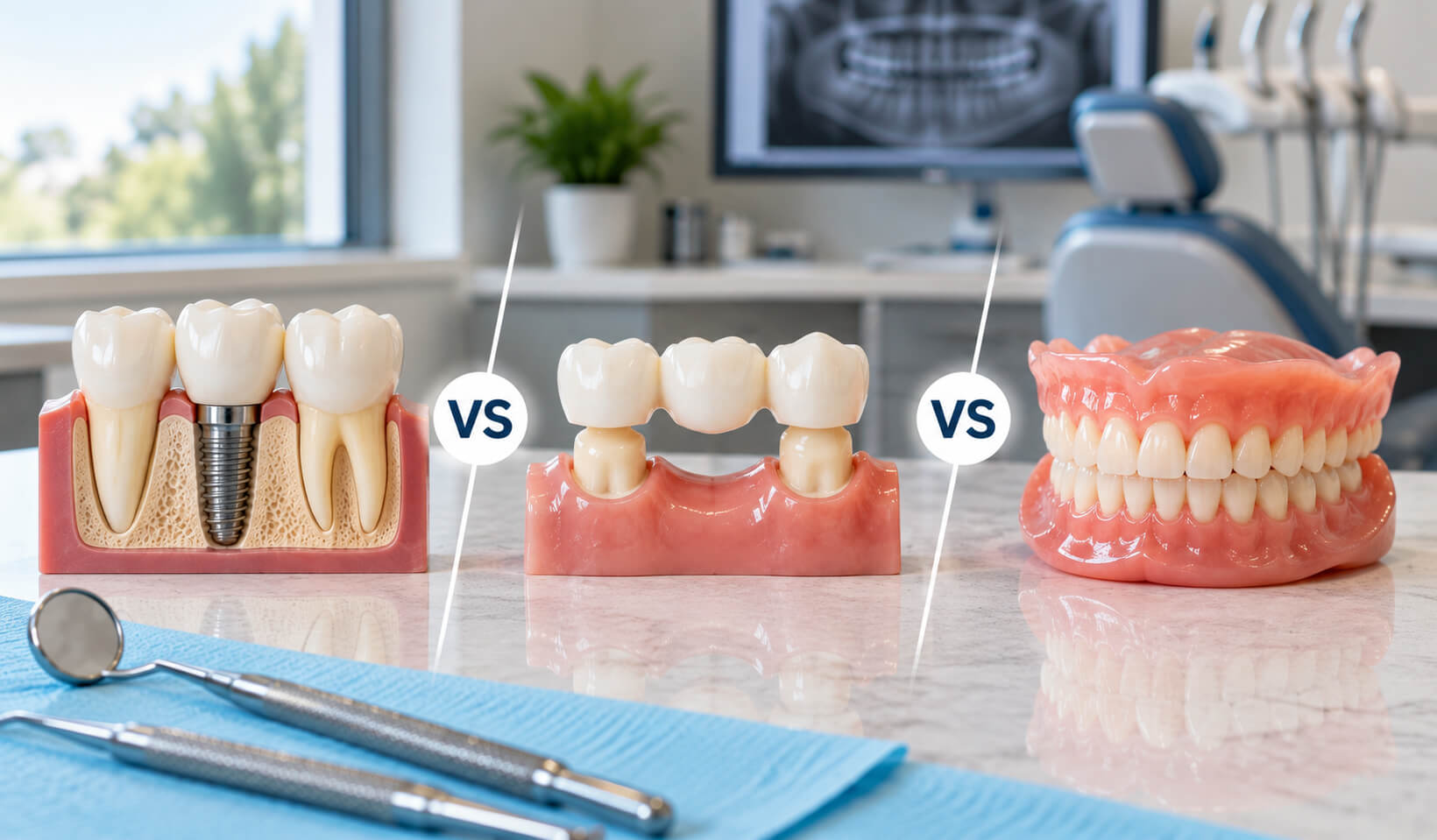
A dental implant is a small, biocompatible post that replaces the root of a missing tooth. After the implant integrates with the jawbone, it can support a dental crown, bridge, or denture. Dental implants are one option for replacing missing teeth, and suitability depends on your oral health, jawbone support, medical history, and treatment goals.
An implant-supported restoration is designed to remain fixed in the mouth. However, every patient is different, and a dental examination is needed to determine whether an implant, bridge, denture, or another restoration is the most appropriate choice.
Can Adults With Tooth Loss Get Dental Implants?
Yes. Dental implants for adults with tooth loss may be an option for many patients, whether they are missing one tooth, several teeth, or need a more complete tooth replacement solution. The right treatment depends on the location of the missing teeth, the health of the gums, the amount of jawbone support, and your overall dental needs.
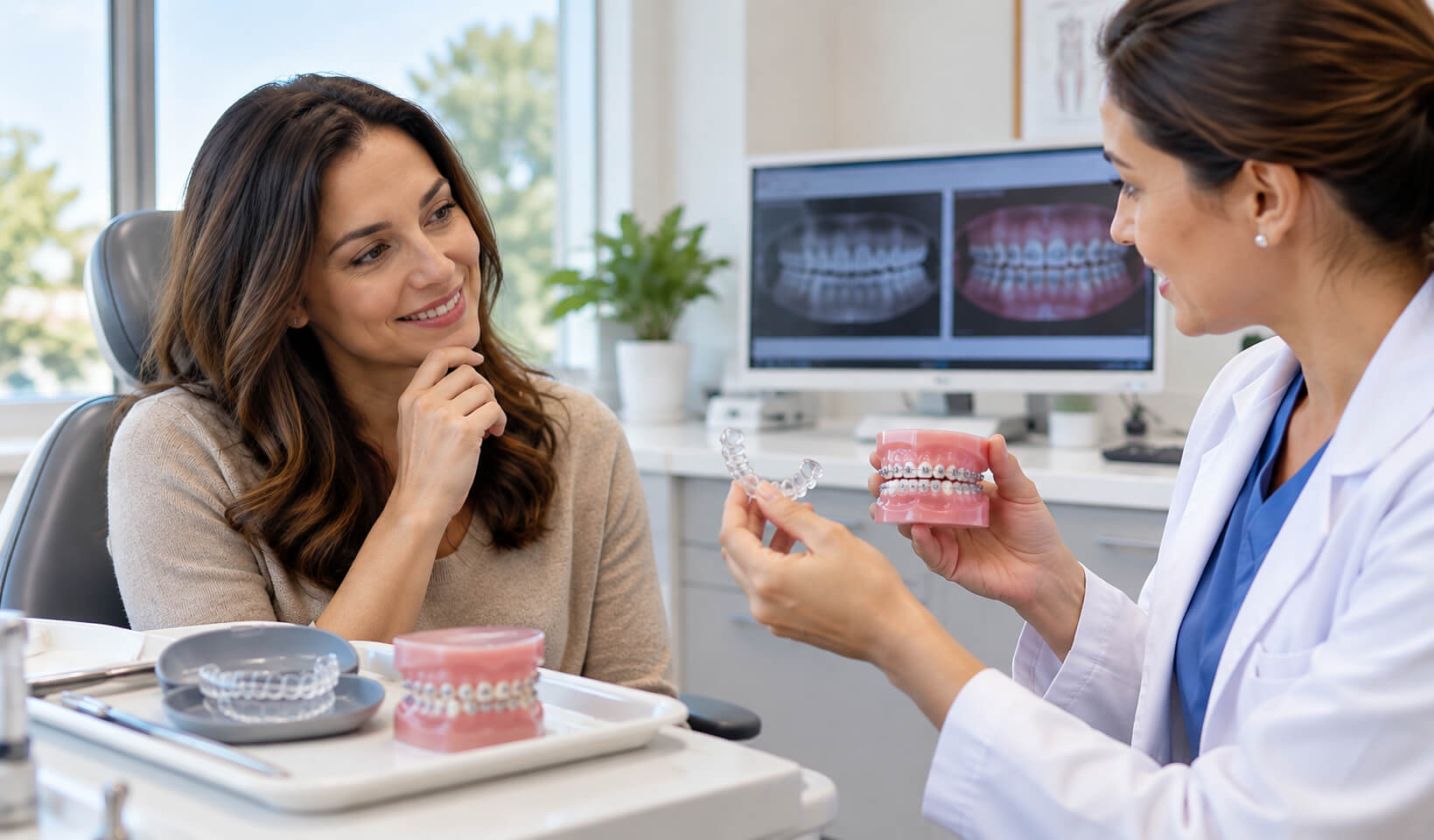
A consultation allows the dentist to review your smile, discuss your goals, and explain which tooth replacement options may fit your situation. Dental implants are not the only solution, so it is important to understand all available options before making a decision.
Can You Get Dental Implants With Bone Loss?
Tooth loss can sometimes lead to bone loss in the jaw over time. Bone loss does not automatically mean that dental implants are unavailable, but the amount and quality of remaining bone must be evaluated during treatment planning.
If bone support is limited, the dentist may discuss additional planning or alternative tooth replacement options. The best approach depends on your individual oral health and the findings of a comprehensive dental evaluation
How Does Gum Disease Affect Dental Implant Candidacy?
Gum disease, also called periodontal disease, affects the tissues that support the teeth. Early gum disease may cause redness, swelling, or bleeding gums. More advanced periodontal disease can affect the bone and tissues that help keep teeth stable.
Healthy gums and controlled periodontal disease are important considerations before dental implant treatment. If gum disease is present, the dentist may recommend periodontal care before moving forward with implant planning. A dental exam is needed to determine the extent of gum disease and the most appropriate next steps.
Read the Complete 2026 Guide to Periodontal Disease Treatment in Somerset, NJ: https://www.friendlydental.us/blogs/periodontal-disease-treatment-somerset-nj-complete-2026-guide/
What Are the Steps in the Dental Implant Process?
The dental implant process varies by patient, but it often includes several important stages. Your timeline may differ based on gum health, jawbone support, healing, and the type of restoration planned.
- Step 1: Comprehensive consultation and dental exam. The dentist reviews your oral health, medical history, missing teeth, gum condition, and treatment goals.
- Step 2: Gum health evaluation. If gum disease is present, the dentist may recommend periodontal care before implant planning.
- Step 3: Implant treatment planning. The dentist evaluates jawbone support and discusses whether a crown, bridge, or denture restoration may be appropriate.
- Step 4: Implant placement. The implant post is placed in the jawbone during a planned dental procedure.
- Step 5: Healing period. The implant needs time to integrate with the surrounding bone. Healing time varies by patient and treatment plan.
- Step 6: Final restoration. Once healing is complete, the dentist attaches the final crown, bridge, or denture restoration.
Following personalized aftercare instructions and attending recommended follow-up visits can support a smoother treatment experience. Regular dental cleanings and preventive care also play an important role in maintaining oral health.
Care Before and After Implant Treatment
For adults with tooth loss or gum disease, care may involve more than implant placement alone. The goal is to support healthy gums and create a stable foundation for tooth replacement.
- Periodontal care may be recommended to address gum inflammation, infection, or tissue concerns.
- Scaling and root planing may be recommended when plaque and tartar below the gumline contribute to periodontal disease.
- Professional dental hygiene visits can help support gum health before and after treatment.
- Jawbone support and implant suitability are evaluated during the consultation and treatment planning process.
- If an implant is not appropriate at this time, the dentist may discuss alternatives such as a dental bridge or denture.
Frequently Asked Questions
Schedule a Dental Implant Consultation in Somerset County
If you are missing one or more teeth and have questions about dental implants, gum disease, or jawbone support, Friendly Dental of Somerset can help you understand your options. Our team provides patient-first, comprehensive dental care and welcomes patients from Somerset, Franklin, Hillsborough, Bridgewater, Manville, New Brunswick, and nearby communities.
Call Friendly Dental of Somerset at +1 855-960-3860 to request an appointment or learn whether dental implants in Somerset County may be right for you.
Disclaimer:
This content is for general educational purposes only and is not a substitute for a dental exam, diagnosis, or personalized treatment plan. Please schedule a consultation with Friendly Dental of Somerset or contact a qualified dental professional for advice specific to your oral health. Treatment outcomes vary by patient, oral health, bone support, gum health, home care, and follow-up visits.