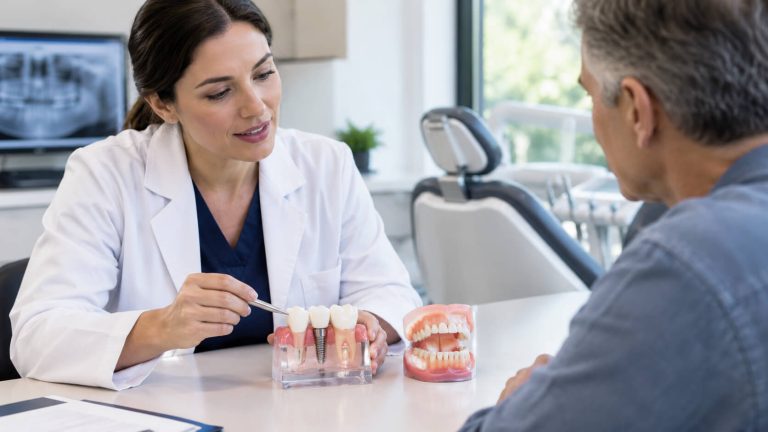
Losing a tooth can lead to jawbone loss over time. If you are planning a bone graft for dental implants, you probably want to know how long recovery takes, which graft type is used, and what to expect at each stage. This guide from Friendly Dental of Somerset in Somerset, NJ explains the dental bone graft healing timeline, the main graft types, and the factors behind dental bone grafting cost nj.
What Is a Bone Graft for Dental Implants?
A dental bone graft is a procedure that places bone or bone substitute material in an area of the jaw where bone volume is low. Over time, your body can replace or integrate the material with new bone. The goal is a stable base for a titanium implant, which acts as an artificial tooth root. A consultation is required to know if you need one.
Many patients first hear about grafting while planning dental implants at our Somerset office. Not everyone needs it. Imaging shows how much bone you have and where.
Why Is a Bone Graft Needed Before an Implant?
Jawbone stays strong when it is stimulated by tooth roots. After a tooth is removed, the bone in that spot can shrink. Gum disease, long-term missing teeth, injury, and infection can also reduce bone. A bone graft before implant placement may help rebuild height or width so the implant can be positioned well.
- Bone loss after tooth removal, especially if the gap was left untreated for a long time
- Advanced gum disease that damaged supporting bone (learn about periodontal disease care)
- Upper back jaw areas where the sinus sits close to the ridge
- Injury, infection, or a past cyst or tumor removal
Sometimes grafting is done at the time of tooth extraction to protect the socket, which is often called socket preservation. This may reduce the amount of rebuilding needed later.
Types of Dental Bone Grafts
Graft material comes from different sources. Your dentist chooses based on the site, the amount of bone needed, and your health history.
| Graft type | Source | Notes |
| Autograft | Your own bone, often from the jaw or chin | Uses your own tissue but needs a second surgical site |
| Allograft | Processed human donor bone | Common option; no second site needed |
| Xenograft | Processed animal bone, often bovine | Acts as a scaffold for your own bone to grow |
| Alloplast | Synthetic material | Lab-made; used for smaller defects in some cases |
Common graft procedures
- Socket preservation: placed in the extraction site right after a tooth is removed
- Ridge augmentation: rebuilds width or height of the jaw ridge
- Sinus lift: adds bone under the sinus in the upper jaw
Which type is right for you depends on exam findings. No type is right for everyone.
Dental Bone Graft Healing Timeline
The dental bone graft healing timeline varies depending on the person and procedure. The ranges below are general estimates, not promises. Your dentist will set your schedule after reviewing X-rays or 3D imaging.
| Stage | Typical timing | What happens |
| Days 1 to 3 | Right after surgery | Swelling, mild bleeding, and soreness are common |
| Days 4 to 14 | First two weeks | Swelling eases; stitches may be removed or dissolve |
| Weeks 2 to 6 | Early healing | Gum tissue closes and the graft begins to integrate |
| Months 3 to 6 | Bone maturation | Common wait for smaller grafts such as socket preservation |
| Months 4 to 9 | Larger grafts | Common range for ridge augmentation or sinus lift |
| After healing | Implant stage | Implant is placed if imaging shows enough bone |
After the implant is placed, bone typically needs another 3 to 6 months to fuse with it. See our overview in the complete guide to dental implants for the full treatment path. In some cases the graft and implant are done in the same visit, but that depends on the bone available.
Bone Graft Recovery Jaw: What to Expect
Bone graft recovery jaw symptoms are usually manageable with your dentist’s instructions. Here is what many patients notice.
- Swelling that peaks around day 2 or 3, then slowly improves
- Mild to moderate soreness, often managed with medicines your dentist approves
- Light bleeding or oozing in the first day
- Small graft particles that may come out of the site; tell your dentist if this continues
- A softer diet for the first days or weeks
Call the office if pain worsens after the first few days, swelling spreads, you have a fever, or the site has a bad taste or smell.
How to Care for Your Jaw After a Graft
- Follow all written instructions from Dr. Sandeep Kaur and the team.
- Use cold packs in short intervals during the first 24 to 48 hours if advised.
- Eat soft, cool foods and avoid chewing on the graft site.
- Do not use straws, smoke, or vape. These habits can disrupt healing.
- Rinse gently as directed and keep the rest of your mouth clean.
- Attend every follow-up so the site can be checked.
Dental Bone Grafting Cost in NJ
Many patients search for dental bone grafting cost nj before booking. Cost depends on the graft type, the size of the site, whether it is combined with an extraction or sinus lift, imaging needs, and insurance. Because every jaw is different, a firm figure requires an exam. Friendly Dental of Somerset reviews your bone volume with digital X-rays so you can see costs before you commit.
Bone grafting is usually one part of total implant care. Our breakdown of dental implant costs shows how graft, implant, abutment, and crown fit together. Ask about insurance and financing options during your free consultation.
Bone Graft Risks and Warning Signs
Every surgery has risks. Possible issues include infection, graft not integrating, sinus membrane tear in sinus lifts, and delayed healing. Smoking, uncontrolled diabetes, and some medicines may raise risk. Share your full medical history with your dentist.
Frequently Asked Questions
Next Steps in Somerset, NJ
If you are considering a bone graft for dental implants, the first step is an exam with imaging. Dr. Sandeep Kaur, DDS, a graduate of NYU College of Dentistry, and our English and Spanish-speaking team can explain your options in clear terms. ¡Hablamos Español!
Book your free consultation: call +1 855-960-3860 or visit us at 31 Clyde Road, Suite 101, Somerset, NJ 08873.
| Contact Friendly Dental of Somerset 31 Clyde Road, Suite 101, Somerset, NJ 08873 Phone: +1 855-960-3860 Email: info@friendlydental.us |
Medical disclaimer: This article is for education only and is not a diagnosis or treatment advice. Healing times and costs vary. A dental consultation is required to determine the right plan for you.