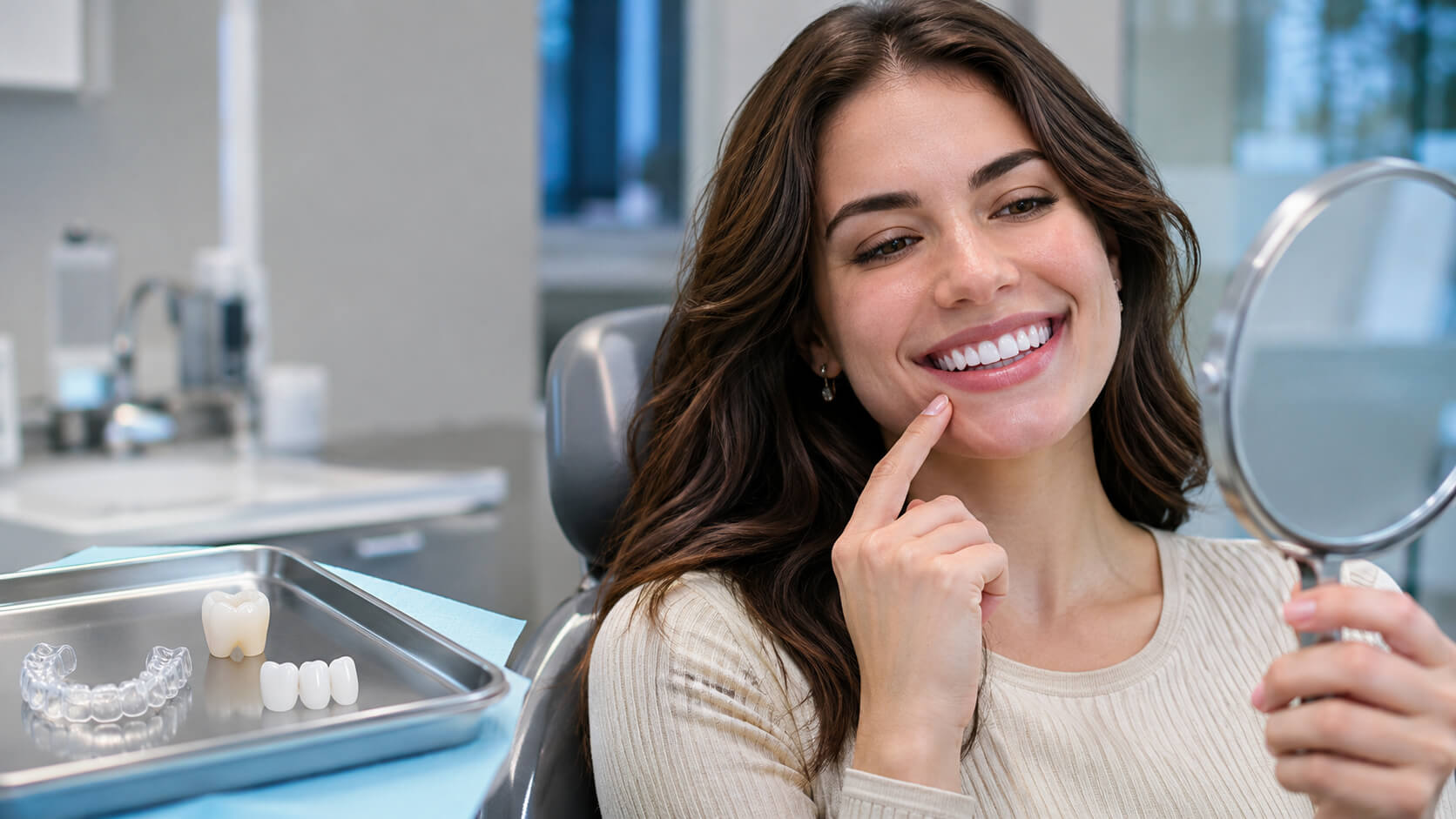
If you have porcelain veneers, dental crowns, or recently finished Invisalign treatment, you may be wondering whether whitening your teeth is still an option, and whether it’s safe. This is one of the most common questions patients ask before starting a whitening treatment, and the answer depends on the type of restoration you have, its location in your mouth, and your current oral health.
At Friendly Dental of Somerset, patients often come in for cosmetic consultations after completing Invisalign or receiving veneers or crowns elsewhere, and whitening safety is a frequent topic during these visits. Below, we break down what a dental exam looks for and how whitening interacts with each type of restoration.
What Happens When You Whiten Teeth With Existing Restorations?
Whitening products, whether professional-grade or over-the-counter, use peroxide-based gels that work by breaking down staining compounds within the natural enamel and dentin of a tooth. Porcelain, composite resin, and other restorative materials used for veneers, crowns, and fillings do not respond to these gels the same way natural tooth structure does.
This means whitening itself is generally considered low-risk for the restoration material. The main concern is cosmetic, not structural: if your natural teeth lighten several shades but your veneers, crowns, or bonded areas stay the same color, the difference can become noticeable, particularly on front teeth.
Is It Safe to Whiten Teeth With Porcelain Veneers?
Whitening gel may not damage porcelain veneers, but it also will not change their color. Since veneers are custom-shaded at the time they’re placed, whitening the surrounding natural teeth can leave veneers looking duller or mismatched by comparison. Patients considering both whitening and veneers are often advised to whiten first and have veneers shade-matched afterward, or to discuss options for veneer replacement if a mismatch already exists. A consultation is required to determine which approach fits your specific case.
Is It Safe to Whiten Teeth With Dental Crowns?
The same principle applies to dental crowns. Whitening gel is unlikely to harm a crown, but it will not lighten it, since crowns are typically made from porcelain, ceramic, or zirconia rather than natural enamel. If a front-facing crown was matched to a darker natural tooth that is later whitened, the color difference may become visible. Bringing this up during a consultation can help determine whether whitening now, replacing the crown later, or adjusting your treatment order makes the most sense for your smile.
Is It Safe to Whiten Your Teeth After Invisalign Treatment?
Many patients ask about whitening right after finishing Invisalign treatment, since straighter teeth often bring new attention to tooth color. Because Invisalign moves natural teeth rather than placing restorative material, whitening after treatment does not typically raise the same shade-matching concerns seen with veneers or crowns. Some patients even use their final set of clear aligner-style trays as custom whitening trays, though this should be confirmed with your dentist first. As a Certified Platinum Invisalign Provider, Dr. Sandeep Kaur can evaluate whether your teeth and gums are ready for whitening once your aligner treatment is complete.
Who Should Get a Dental Exam Before Whitening?
A pre-whitening exam is generally recommended for patients who:
- Have visible veneers, crowns, bridges, or bonding on front teeth
- Have untreated cavities, cracked teeth, or exposed roots
- Experience ongoing tooth sensitivity or gum irritation
- Have not had a professional cleaning in the last six months
- Are unsure which of their teeth have restorations versus natural enamel
A dental exam can help identify these factors before whitening begins, since restorations, decay, or gum health can all influence whether whitening is a good fit and which method may work best for your smile.
Safer Whitening Approaches When You Have Restorations
Whitening supervised by a dental provider allows your teeth whitening treatment to be planned around your existing restorations. During a consultation, the treatment plan can account for where your veneers, crowns, or fillings are located, how they may respond compared to natural enamel, and whether adjustments to shade or restoration timing may be needed. Over-the-counter kits are not customized this way and may not account for restorations at all, which is part of why professional guidance is generally recommended for patients with existing dental work.
Myths vs. Facts: Whitening With Restorations
| Myth | Fact |
| Whitening will lighten my veneers or crowns. | Whitening gel is designed for natural enamel and generally does not change the color of porcelain, ceramic, or composite restorations. |
| Whitening always damages crowns and veneers. | Whitening is not typically associated with damage to restoration material itself; the main consideration is a possible shade mismatch. |
| I can’t whiten at all if I have any dental work. | Many patients with restorations can still whiten their natural teeth; a consultation helps confirm whether it’s a good fit for you. |
| Whitening after Invisalign is riskier than usual. | Whitening after Invisalign does not typically involve added restoration-related risk, since aligners move natural teeth rather than adding material to them. |
Frequently Asked Questions
Ready to Find Out If Whitening Is Right for You?
If you have veneers, crowns, or recently completed Invisalign and are considering teeth whitening, Friendly Dental of Somerset can evaluate your smile and discuss options during a personal consultation.
Call Friendly Dental of Somerset at +1 855-960-3860 to request an appointment, or contact us online to get started.
Related Reading
- The Real Benefits of Teeth Whitening Treatment
- Certified Platinum Invisalign Provider in Somerset, NJ
- Dental Crowns vs. Fillings: What’s the Difference?
- Explore Cosmetic Dentistry Services
Friendly Dental of Somerset
31 Clyde Road, Suite 101, Somerset, NJ 08873
Phone: +1 855-960-3860
Website: https://www.friendlydental.us/