Many parents are surprised to learn that a baby’s first teeth can develop cavities within months of appearing. Baby bottle tooth decay is one of the most common reasons, and it is also one of the most preventable. This guide explains what causes it, which infant tooth decay signs to watch for, and the everyday habits that may protect your child’s smile.
Friendly Dental of Somerset welcomes infants, toddlers and families, and our team can walk you through each step during an exam. If you have questions as you read, call us at +1 855-960-3860.
What Is Baby Bottle Tooth Decay?
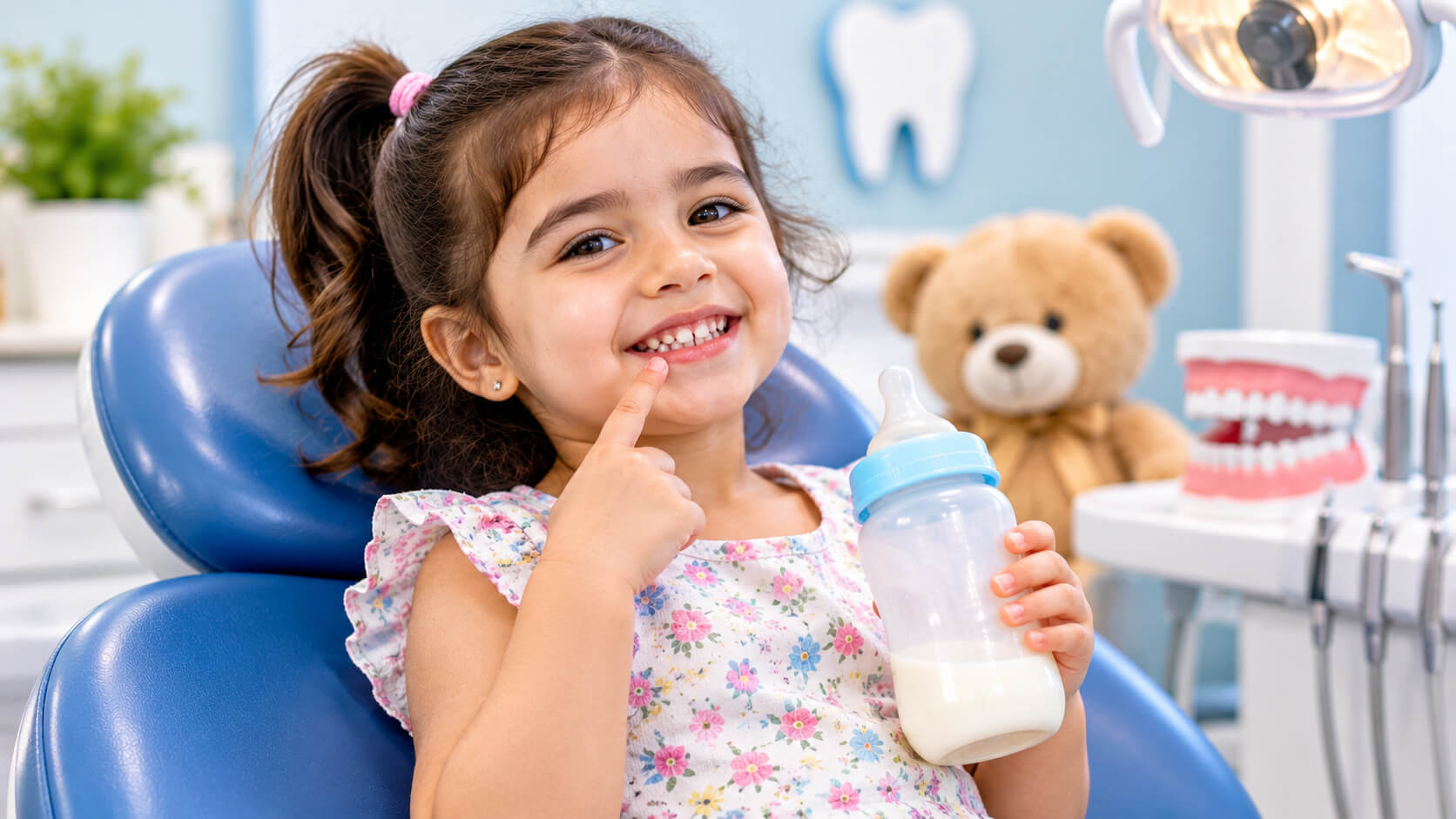
Baby bottle tooth decay is tooth decay that develops when an infant’s or toddler’s teeth are bathed in sugary liquids for long stretches. Milk, formula, breast milk, juice and sweetened drinks all contain sugars. Mouth bacteria feed on those sugars and produce acids that weaken tooth enamel over time.
Dentists also use the broader term early childhood caries for cavities in children under six. Parents often search for the same issue as milk bottle cavities toddlers develop, and all of these terms point to the same pattern: frequent sugar exposure combined with limited cleaning.
What Causes Baby Bottle Tooth Decay?
Several habits and factors can work together. The most common cause is putting a child to bed with a bottle that holds anything other than water. Saliva flow drops during sleep, so sugars stay on the teeth longer.
Each time sugar touches the teeth, bacteria can create an acid attack that lasts around 20 minutes. Frequent sipping throughout the day multiplies those attacks, which may raise the risk of enamel breakdown.
Common Contributing Factors
- Bedtime or naptime bottles filled with milk, formula or juice.
- Sippy cups carried around and sipped on all day.
- Dipping pacifiers in sugar, honey or syrup.
- Skipping gum and tooth cleaning after feedings.
- Sharing spoons or cleaning a pacifier with saliva, which may pass cavity-causing bacteria to the child.
- Limited fluoride exposure, which a dentist can discuss with you.
- Frequent snacking on sugary or sticky foods.
Infant Tooth Decay Signs to Watch For
Knowing the infant tooth decay signs helps you act early. Check your baby’s teeth every couple of weeks, lifting the lip to look at the front and back surfaces. A dental exam is needed to confirm whether any change is decay.
| Stage | What You May See | What to Do |
| Early | Chalky white spots or dull lines near the gumline, often on the upper front teeth | Schedule a dental exam and review feeding habits |
| Developing | Light brown or yellow spots, rough texture | Book a visit soon so the dentist can evaluate the teeth |
| Advanced | Dark brown or black areas, visible holes, fussiness when eating, swollen gums | Contact a dentist promptly. Seek urgent care for swelling or fever |
Early spots are easy to miss, which is why routine checks matter. If you notice a change in color, texture, or your child’s comfort while eating, a visit to the dentist can help determine the cause.
How Does It Relate to Early Childhood Caries?
Early childhood caries is the clinical umbrella term for decay in the primary teeth of young children. Baby bottle tooth decay is one pattern within it, usually tied to feeding habits. Other contributors include diet, oral hygiene, fluoride exposure and family history.
The American Academy of Pediatric Dentistry (AAPD) provides policy guidance on early childhood caries and recommends early risk assessment. You can read more at the AAPD website.
Why Do Baby Teeth Matter?
Primary teeth help children chew, speak clearly, and hold space for permanent teeth. Losing a baby tooth too early may cause nearby teeth to shift, and in some cases a space maintainer is needed. Our early dental care page explains how healthy baby teeth support growth and development.
Untreated decay can also cause discomfort and may lead to infection. That is why even small spots are worth having checked.
How to Prevent Milk Bottle Cavities in Toddlers
Prevention is mostly about small, steady habits. These steps can lower the risk of milk bottle cavities toddlers often face:
- Offer plain water in the bottle at bedtime and naptime.
- Finish feedings before sleep, then wipe gums or brush teeth.
- Clean your baby’s gums with a soft damp cloth after feedings, even before teeth appear.
- Brush erupted teeth twice daily with a soft brush and a rice-grain smear of fluoride toothpaste, as advised by your dentist.
- Introduce a cup around the first birthday and move away from the bottle gradually.
- Avoid dipping pacifiers in sugary substances.
- Limit juice and sweet snacks, and offer cheese, vegetables or plain yogurt instead.
- Ask your dentist whether fluoride varnish suits your child.
Daily care works best with professional support. Learn how routine cleanings fit in on our dental hygiene page, and explore all preventive dentistry services offered at Friendly Dental of Somerset.
When Should Your Child See a Dentist?
The AAPD recommends a first dental visit by a child’s first birthday or within six months of the first tooth appearing. At that visit, the dentist checks the teeth and gums, reviews feeding and cleaning habits, and answers your questions. Our guide to your child’s first dental visit explains what to expect and how to keep the experience positive.
As your child grows, dental sealants for kids may later help protect the back molars once they come in, typically between ages 6 and 12. Fluoride and sealants each play a different role, and a dentist can recommend what suits your child.
Finding a Pediatric Dentist in Somerset, NJ
Parents searching for a pediatric dentist in Somerset NJ often want a warm, welcoming team. Friendly Dental of Somerset is a family dental practice, and our family dentistry approach allows parents and children to receive care under one roof. Dr. Sandeep Kaur, DDS, a graduate of NYU College of Dentistry, leads the practice, and our English and Spanish speaking staff help families feel comfortable. ¡Hablamos Español!
We welcome patients from Somerset, Franklin, Hillsborough, Bridgewater, Manville, New Brunswick, North Brunswick, South Brunswick, South Bound Brook, Milltown and nearby communities.
Frequently Asked Questions
Conclusion: Protect Your Child’s First Smile
Baby bottle tooth decay is highly preventable when parents establish simple daily cleaning routines, practice safe bedtime bottle habits, and monitor developing teeth for early discoloration. Recognizing subtle infant tooth decay signs allows you to take action before minor enamel changes turn into deeper cavities or painful dental issues.
Whether you need guidance on moving away from the bedtime bottle, want advice on managing early childhood caries, or are searching for a welcoming pediatric dentist Somerset NJ families trust, Friendly Dental of Somerset is ready to partner with your family. Early preventive visits build positive dental experiences and protect your child’s smile for years to come.
| Schedule Your Child’s Visit: Call Friendly Dental of Somerset at +1 855-960-3860 or request an appointment online through our contact page. |
Friendly Dental of Somerset
31 Clyde Road, Suite 101, Somerset, NJ 08873
Phone: +1 855-960-3860
Website: https://www.friendlydental.us/